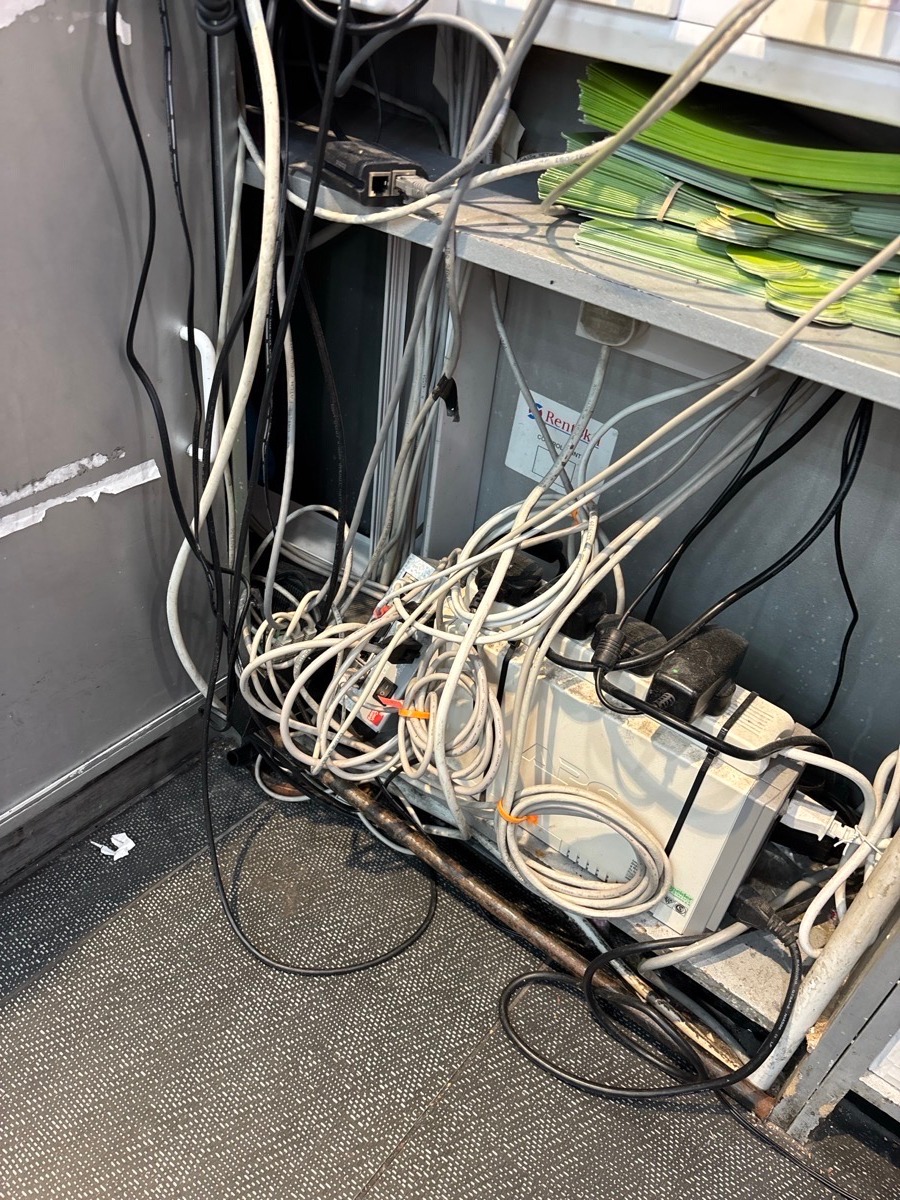
During a recent site audit, I came across something that genuinely stopped me in my tracks. Behind a workstation, tucked away where people might assume everything was “taken care of,” was a chaotic tangle of electrical cables, adapters, extension leads, and equipment piled together in a way that can only be described as alarming.
What I saw was not just messy — it was dangerous.
Multiple electrical leads were tangled and looped around each other, adapters stacked on power boards, cables running across the floor and behind equipment, and dust building up around electrical components. This kind of setup is a textbook example of a potential fire hazard waiting to happen.
The first thought that crossed my mind was simple: How on earth did this get left like this?
Electrical installations and equipment setups should always follow basic safety principles — proper cable management, avoiding overloaded power boards, maintaining clear access, and ensuring equipment is installed in a safe and organised manner. None of those principles were visible here.
But what really made me pause was this question:
Would you allow this in your own home?
Most people wouldn’t tolerate a bundle of overloaded power boards and tangled electrical cords sitting behind their TV or computer desk at home. We instinctively know it’s unsafe. So why does it sometimes become acceptable in a workplace environment where multiple people rely on that infrastructure every day?
Workplaces have a duty of care to ensure that electrical systems are maintained safely. Poor cable management and overloaded electrical connections increase the risk of overheating, equipment failure, and potentially fire. Beyond the fire risk, tangled cables also create trip hazards and make maintenance or emergency access far more difficult.
Situations like this often develop slowly over time — a new device gets added, a temporary cable becomes permanent, another adapter gets plugged in, and before long the system becomes a patchwork of quick fixes.
But temporary fixes should never become permanent risks.
Audits are not about pointing fingers; they are about identifying hazards before they turn into incidents. The solution here isn’t complicated: proper cable routing, removing unnecessary adapters, installing adequate power outlets, and implementing basic cable management practices.
A few simple corrections can turn a dangerous setup into a safe and professional one.
The real takeaway from this audit is a reminder for all of us: if something doesn’t look safe, it probably isn’t.
And if you wouldn’t accept it in your own home, it certainly shouldn’t be acceptable in someone’s workplace.